- Parks Victoria
- Australian Alps
- Alps Fire Complex
Honderden jaren lang verzamelden de Aboriginals uit het berggebied zich bij MT Buffalo om de komst van de Bogong-mot te vieren. Dat deden ze door hele zwermen van die insecten te vangen en op te eten. De ontdekkingsreizigers Hume en Hovell trokken in 1824 door het gebied en gaven de berg zijn naam omdat zij vonden dat deze op een bizon leek.
Het plaatsje Bright, dat vlak bij het park ligt, ontstond tijdens de Goldrush in de jaren 50 van de 19de eeuw. De Bright Alpine Club werd in 1883 opgericht om bezoekers te informeren over de activiteiten die men in de natuur in de omgeving kon ondernemen. Het was deze club die actief gelobbyd heeft om het gebied te beschermen. In 1898 verkreeg 1.152 hectare de status van nationaal park en in 1908 werd er een weg dwars door het park aangelegd. Twee jaar later werd Mount Buffalo Chalet gebouwd en in 1936 werd de eerste Australische skilift geïnstalleerd in Cresta Valley. Tegenwoordig is het park 31.000 hectare groot en maakt het deel uit van de Australian Alps National Parks, een samenwerkingsverband tussen Victoria, NSW en ACT.
 |
 |
 |
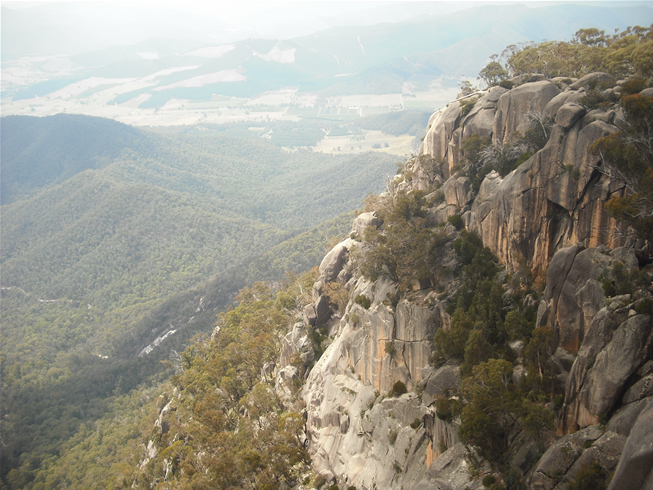 |
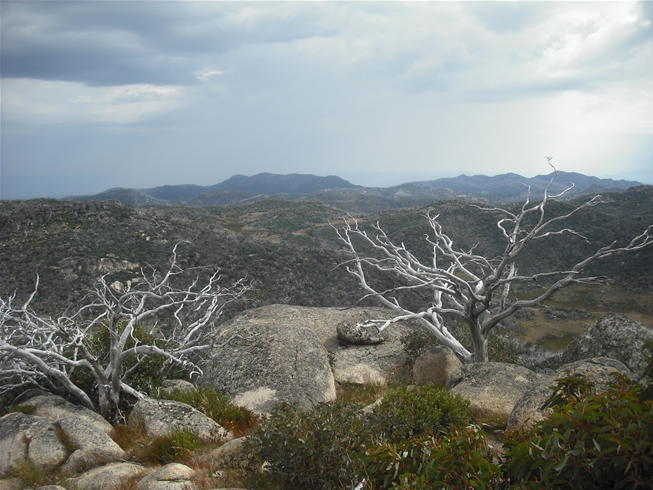
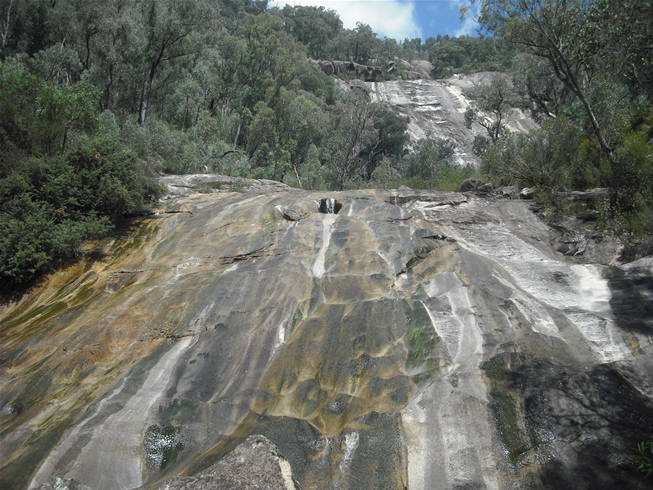
| uitzicht vanaf The Horn | Eurobin Falls | The Cathedral vanaf The Hump | Bents Lookout |
Tijdens de zomers van 2003 en 2006 trokken grote branden door de Australian Alps. Half december 2006 werd Cresta Valley Lodge verwoest maar Mount Buffalo Chalet wist men te redden. Begin maart 2012, 2 weken nadat wij het park hadden bezocht, was er een aardverschuiving als gevolg van hevige regenval. Www.theage.com.au meldt op 2 maart:
Heavy rain in northern Victoria led to the stranding of 29 people on Mount Buffalo last night, after huge boulders and debris slipped down the mountainside and onto the summit road, blocking both lanes. Sixteen children and three teachers from a regional high school, a VicRoads work crew, campers, park rangers and a cafe licensee were all caught above the landslip, which occurred after Mount Buffalo received 175 millimetres of rain in less than a day and a half.
VicRoads regional director for the north-east Graham Freestone said there had been a number of landslips in the area, with the Mount Buffalo incident the most significant. The boulders were too heavy to be moved by earthmoving equipment, so a crew was sent up in a bid to blast them into smaller parts. ''It's one of those mountain roads that's fairly windy and it's very steep country, so it is vulnerable to both slips from above, which put rocks and debris on the road, and also slips from below,'' Mr Freestone said. Peter Jacobs of Parks Victoria said nobody was injured by the landslip. Those stuck on the mountain overnight would be in comfortable conditions in a day visitor lodge. He said heavy rain and some road damage was not unusual for Mount Buffalo. ''But a slip of this size is certainly unusual.''
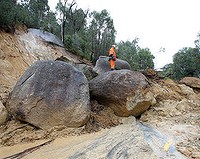 The blockage was one of scores of road closures or disruptions in Victoria's north yesterday due to the rainfall. The northbound lanes of the Hume Freeway north of Wangaratta were closed yesterday afternoon because of flooding. Northbound traffic was redirected to one of the southbound lanes and speed restrictions were imposed. Daily rainfall records for March were broken at a string of locations including Tallangatta - which received 103.6 millimetres in the 24 hours - Tungamah (103.6), Wodonga (88.4), Rutherglen (80.6), Yackandandah (102.6) and Mangalore (71.4). Some locations in the north and north-east received more than 180 millimetres of rain in 72 hours.
 Flooding on the plains north of Shepparton drowned stock, knocked out farm fences, inundated large swaths of farmland and damaged bridges. A spokeswoman for the State Emergency Service said five houses and the pub at Tallygaroopna were flooded. SES and CFA volunteers have been in overdrive, with almost 700 requests for assistance to the SES in the north-east between Sunday and last night. About 200 SES volunteers were working in the north with a further 20 due to arrive from other districts today.
Bureau of Meteorology forecaster Andrea Peace said the heavy rains were unusual for this time of year. ''Traditionally February and March are Victoria's driest months of the year. We've had a lot of tropical moisture coming down over the last week, which has led to really significant rainfall, particularly about the central, north central and eastern parts of the state,'' she said.