links: Wagga Wagga
midden en rechts: spinnen zoeken massal veiligheid op droge plekken.
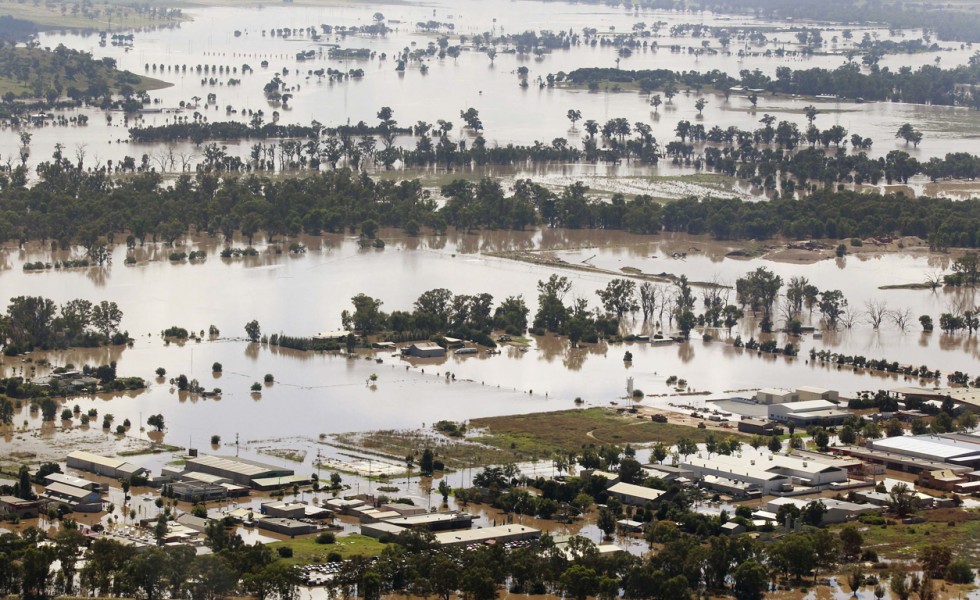
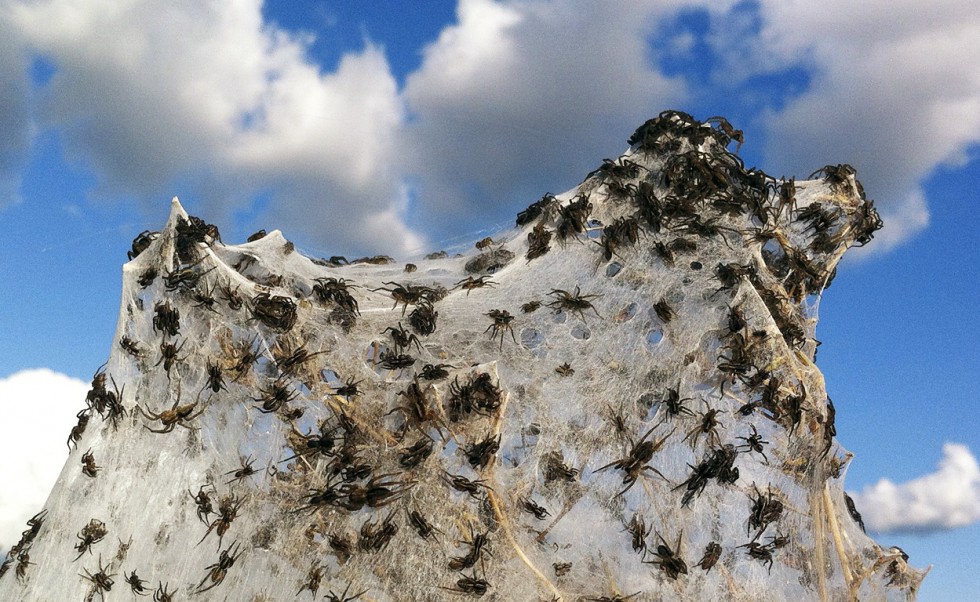
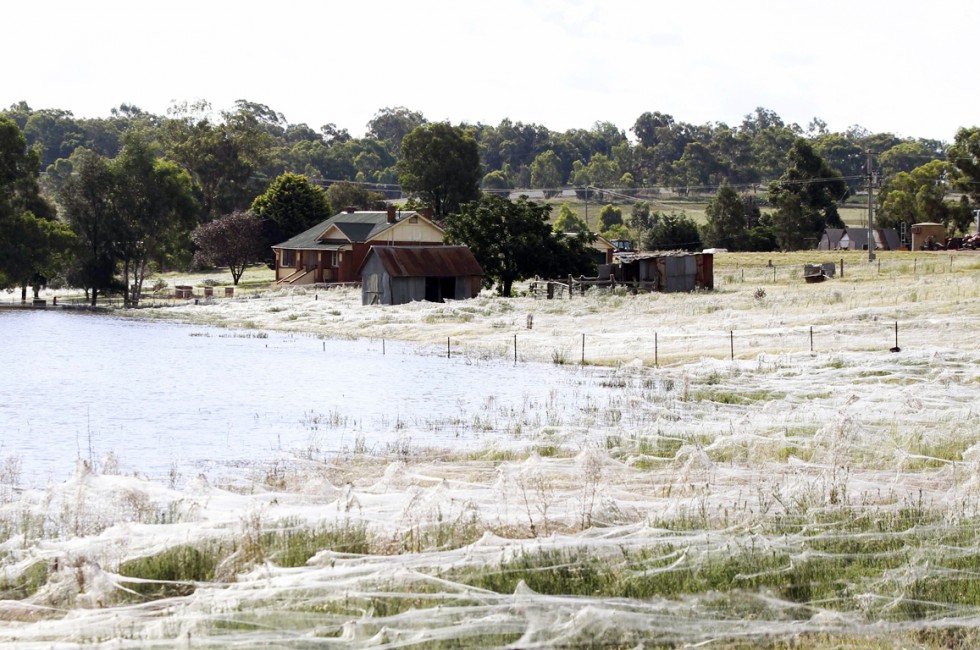
Bron: http://www.abc.net.au, 7 maart 2012.
Griffith, Forbes latest in flood firing line
Hundreds of people in southern New South Wales are spending the night away from their homes, with fears that low-lying parts of Griffith and towns downstream of Wagga Wagga could be inundated by floodwaters.
About 600 people have been evacuated from their homes in Griffith, while residents in Narrandera are also preparing for major flooding in coming days. Wagga Wagga's levee held through the flood's peak yesterday and about 9,000 residents were given the all-clear to return to their homes and businesses this morning. Prime Minister Julia Gillard visited the region this afternoon and was told by the SES that major flooding was forecast downstream of the Murrumbidgee River. Food drops are being planned but Ms Gillard says she will wait for a request from the NSW Government for any further federal assistance.
The flood situation is also worsening in the central west, with the town of Forbes cut in half by the swollen Lachlan River, which is expected to peak on Friday morning, later than first thought. SES spokesman Alex Chesser says the flooding is steadily swallowing parts of the town. "The major flood level for that point is actually 10.4 metres and that was reached yesterday morning," he said. "We currently have a river height of about 10.53 metres which we expect to rise to 10.65 at its peak on Friday morning."
Detective Inspector Paul Jones says police have stepped up patrols there to prevent empty homes from being looted. "A number of houses have been evacuated, so we're keeping an eye on those houses as well," he said. "At this stage there's no reports of any looting or anything, but police are very mindful of that and that's why we increase our patrols," he said. Yenda resident Paul Rogerson says he was surprised at how quickly the waters rose, even though people had been given plenty of warning. "We had some sandbags there and we were ready to battle it but it was just amazing how quick it came up," he said. "We measured a two-inch rise in eight minutes. We got out when it was about knee deep."
Heart-breaking
While Wagga Wagga's levee held, the flood-prone suburb of North Wagga remains a concern, with hundreds of homes inundated. Ms Gillard predicted major economic damage for the region. "This is the start of what is going to be many, many, many long months of recovery," she said. "Getting to see it from the air gives you a really good sense of the impact. "And when you see a house that's got floodwaters up to the eves, then you just know the damage that's been done inside that home is truly devastating. "So for people, when they're able to get back to those homes and start the clean-up, it's going to be a very heartbreaking time."
As it meanders west through farmland, the swollen Murrumbidgee threatens not only homes in the region, but thousands of head of livestock. Adrian Knobel, who is managing the Department of Primary Industry's response, says thousands of animals have been killed. "We've probably got around 2,300-odd sheep that have been deceased, over 100 lambs, one calf, but there are a number of more under threat - probably around 3,000 sheep still to report," he said.
Damage bill
Ms Gillard also met local federal Nationals MP Michael McCormack, who says the damage bill will top $1 billion. "Local councils are going to bear the brunt of a lot of it, and they're very cash-strapped as we all know," he said. "Our State Government is going to have to pitch in and hopefully she'll bring the cheque book, because the Federal Government is going to need to also provide some financial assistance."
Ms Gillard says it will be some time before it is known how much damage has been done. "Floodwaters are incredibly damaging; they do a lot of damage to infrastructure, to roads, to other forms of infrastructure," she said. "We know that in economic terms, floods do more damage than other natural disasters."
Bron: www.parkweb.vic.gov.au
Flood situation in Mount Buffalo and Alpine National Parks and the Upper Murray
Tuesday 6 March, 2012
Parks Victoria is delighted to announce the reopening of the Mount Buffalo Road reinstating access into the Mount Buffalo National Park in time for the Labour Day Long weekend. VicRoads crews and engineers worked tirelessly over the weekend to clear the road from boulders and debris, and are advising drivers to proceed carefully due to ongoing minor roadworks that will be taking place over this week. Visitors are also reminded to take care when out walking as the tracks will be slippery due to the record 525mm rainfall received in the past week.
There will be a series of continued closures due to the significant flooding in the Upper Murray region, as well as areas of the Alpine National Park. All of the sites in the Murray River Reserve upstream of Lake Hume between Burrowye Bend and Indi Bridge, along with the Clarkes Lagoon Wildlife Reserve will continue to be closed until further notice including the Labour Day weekend.
Other closures for the Labour Day long weekend include sections of the Burrowa-Pine National Park being the Bluff Falls area, Bluff Creek Nature Trail and the Bluff Creek and Blue Gum camping areas. In the Alpine National Park, the section just south of Corryong, the Blue Gum Ridge Track and Surveyors Creek Track will also remain closed due to significant damage.
Closer to the NSW border, the Bridge over the Suggan Buggan River at Suggan Buggan has been washed out. The Snowy River Road (or Barry Way) has been closed between Wulgulmerang and Jindabyne, NSW. This closure will be in place until further notice, affecting access to other areas of the park for the long weekend.
Parks Victoria Chief Ranger Alpine Mr Peter Jacobs advised visitors travelling to North-Eastern Victoria for the long weekend to plan ahead, take care and be sure to stay up-to-date with the latest information and forecasts. "While there are lots of opportunities to visit parks in the Alps over the long weekend, we are advising visitors to stay on the major roads and main walking tracks and keep to the main visitor sites as they may encounter fallen trees, washed out tracks, slips and high river levels throughout the Alpine National Park. "Where possible, we recommend visitors to avoid the back country/remote areas for now as our crews have not been able to access all areas as yet and determine the level of flood damage to these sites", said Mr Jacobs.
Finally, visitors are also reminded that Mount Buffalo National Park will have three short-term closures in specific areas of the park on Wednesday 14 and Thursday 15 March to allow for helicopter deliveries of building materials to fast track upgrades to six popular lookouts.