- Africat
- Okonjima
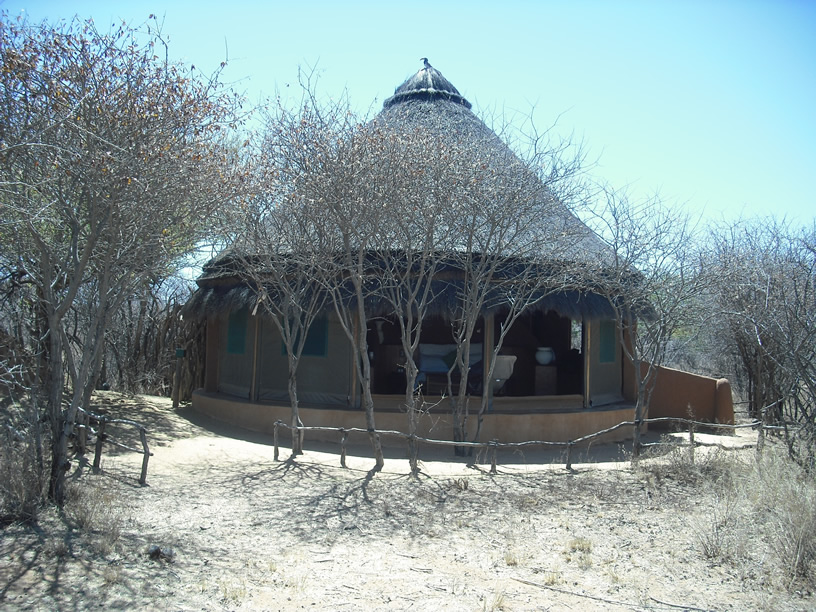
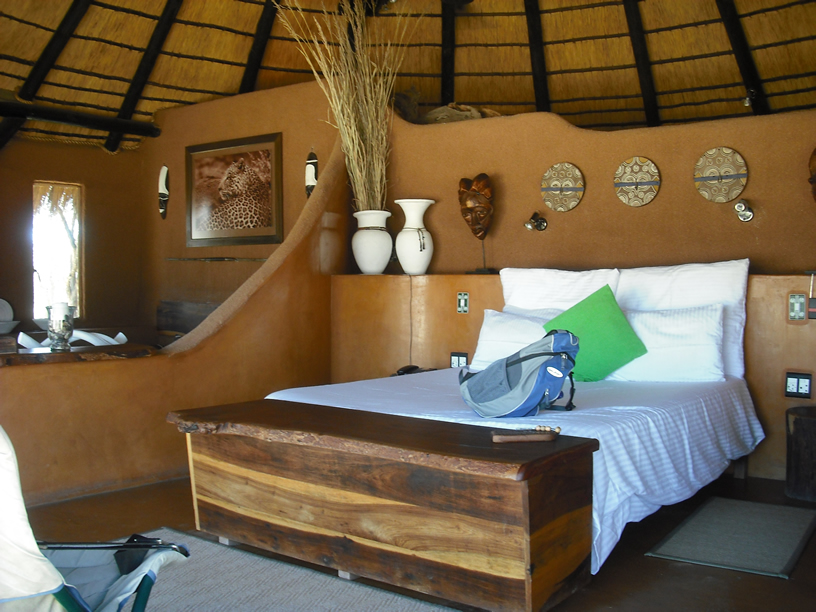
De lodge heeft verschillende types accommodatie. Wij verbleven in een van de 8 huisjes (met rieten dak) in het Luxury Bush Camp. Rond het huisje waren héél veel verschillende vogels te bewonderen. In het hoofdgebouw van deze accommodatie is de bar en het restaurant gevestigd. Het geheel is zeer sfeervol, men is zeer gastvrij en het eten is heel prima.
Het is mogelijk om aan verschillende activiteiten deel te nemen. Aan het eind van de middag zijn wij meegegaan met de game drive op zoek naar een luipaard en in de ochtend stond de zoektocht in het teken van jachtluipaarden. Onze gids Albert was héél kundig en aardig. Na het avondeten lieten we ons naar de plek brengen waar nachtdieren met etensresten werden gevoerd. Dat doet men om dat men het zonde vindt eten weg te gooien. Het gebeurt in het donker omdat de dieren, zoals bijvoorbeeld stekelvarkens, die daar op af komen verder geen ongewenst gedrag gaan vertonen. Zou overdag voedsel worden aangeboden dan zouden er bijvoorbeeld bavianen op afkomen die zichzelf vervolgens aanleren dat er bij mensen eten te halen is. Als je een dergelijk groep bavianen in de buurt hebt dan moet je echt ramen en deuren hermetisch afsluiten; ze vernielen vanalles om maar bij het eten te komen.
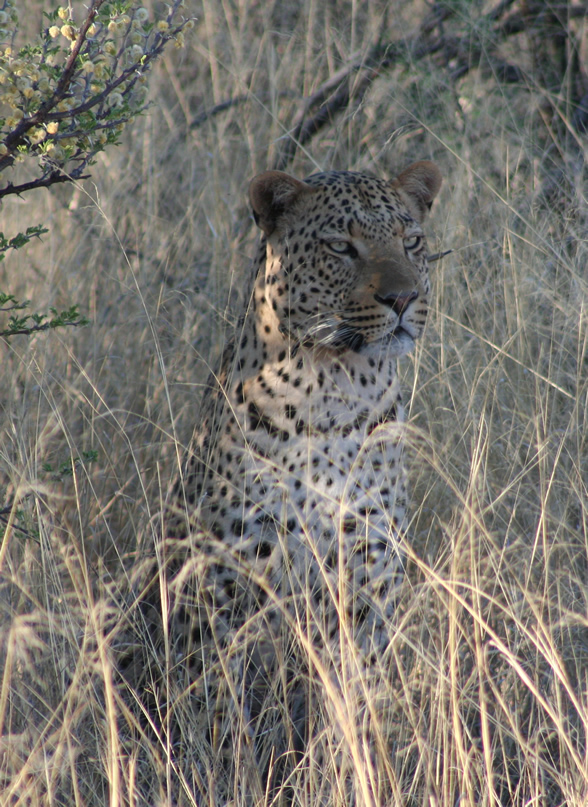 |
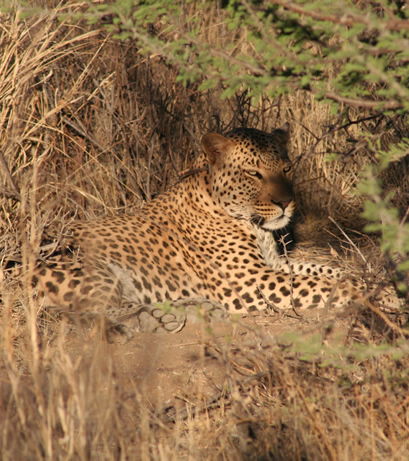 |
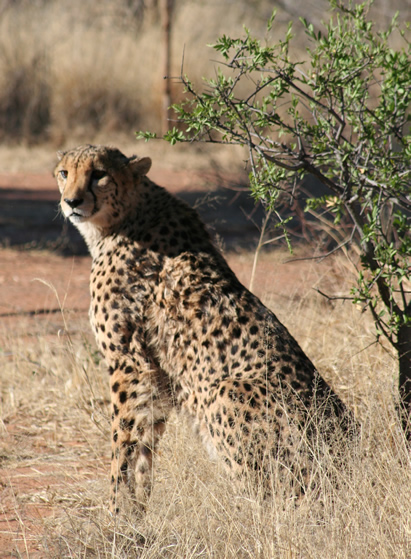 |
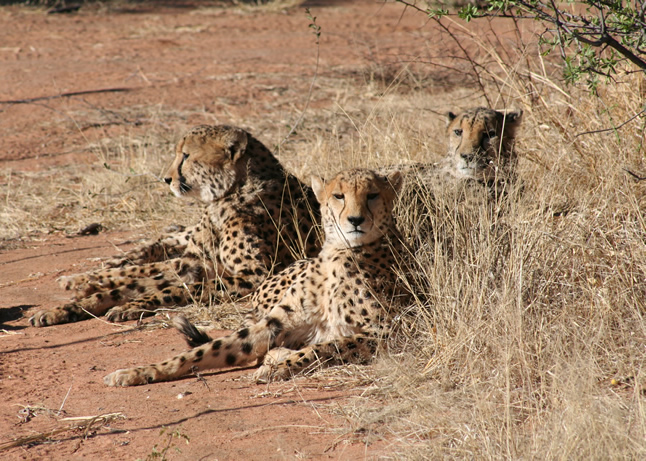 |
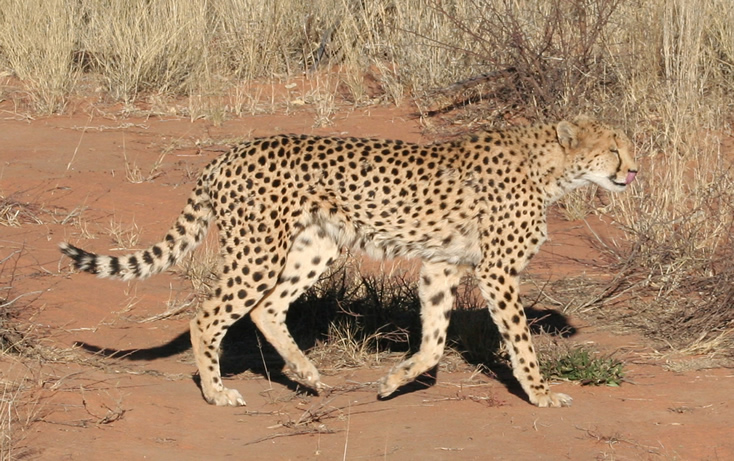 |
| luipaard | luipaard | jachtluipaard | jachtluipaard | jachtluipaard |
AfriCat is in 1991 opgericht en in 1993 officieel geregistreerd als een non-profit organisatie. Volgens de website van AfriCat heeft deze organisatie het grootste jachtluipaard- en luipaardreddingsplan van de wereld en zijn er in de afgelopen 17 jaar meer dan 1000 van deze katten gered en is meer dan 85% weer teruggebracht in het wild. In de loop van de jaren is er ook steeds meer aandacht gekomen voor onderwijs, ondersteuning van de gemeenschap en onderzoek. Dit alles met de missie om een langdurige bescherming van de grote roofdieren van Namibië te bewerkstelligen.
Met het programma waarbij roofdieren worden gevangen en elders weer worden uitgezet helpt AfriCat veeboeren het verlies van vee te verminderen. Men probeert deze migratie zoveel mogelijk te beperken door boeren verschillende technieken aan te bieden om hun vee beter te beschermen. Jonge dieren die te vroeg wees zijn geworden of dieren die gewond zijn geraakt worden door AfriCat opgevangen. De organisatie biedt dieren ook de mogelijkheid hun jacht vaardigheden te ontwikkelen zodat ze toch weer terug kunnen keren naar hun natuurlijke omgeving. Daar heeft AfriCat een gebied van 40.000 hectaren voor beschikbaar gesteld.
 |
 |
 |
 |
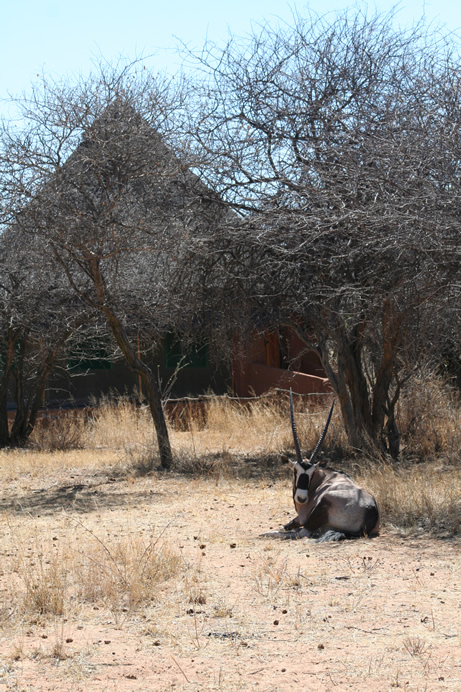 |
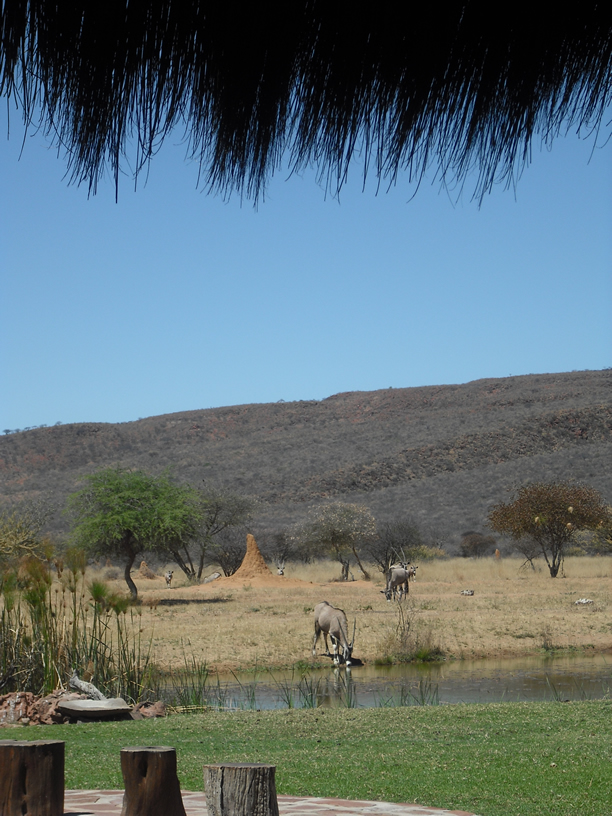
| terras Bush Camp | terras Bush Camp | kamer 5 Bush Camp | kamer 5 Bush Camp | gemsbok |
Bron: www.africat.org (oktober 2010)
The AfriCat story started in 1970 when the Hanssen family settled on the farm Okonjima in central Namibia. Brahman cattle were raised on the land but annual losses of calves to predators, particularly leopard, amounted to between 20 and 30 per year, decimating the herd and causing huge financial losses. As with many farmers at that time, the Hanssens embarked on a programme of trapping, shooting and hunting the leopards in an attempt to control their losses. However, these losses continued at the same rate as before. Other measures were called for and calf-holding pens were built at watering holes where cows could give birth safely. The calves remained in protective custody until they were approximately 4 months old, their mothers coming in at regular intervals to feed them. Employing these livestock protection methods reduced losses to about 3 or 4 per year.
Wayne, the only son, recognised the need for a better understanding between humans and carnivores. He began observing the leopards and becoming more familiar with their habits and movements. At the same time the family started a small bed and breakfast business and tourists visited Okonjima. Wayne’s research had revealed where leopard could be found and he started to share his viewing experiences with the guests. Hunting ceased as more and more guests came to view the big cats at close quarters and Okonjima became a fast-growing tourism enterprise.
At the same time farmers were approaching the Hanssens for advice on livestock protection and to remove cheetahs and leopards that they had caught in traps on their farms. More and more large carnivores were coming to Okonjima to be treated, if necessary, and then released back into the wild. Some of these animals could not be released, having been orphaned at an early age and being too young to fend for themselves. These cats had to be cared for in the long term and the strain on Okonjima’s finances was considerable. In 1993 the AfriCat Foundation was registered as a non-profit organisation to raise finds for the care of these large carnivores. To date AfriCat is the largest rescue and release centre for large carnivores in the world.
Although separate entities, the relationship between Okonjima, a business concern and AfriCat, a registered non-profit organisation, is one of symbiosis. In a nutshell, Okonjima owns and manages the land and operates the tourism business while AfriCat provides the unique selling point: the opportunity for guests to view the large carnivores in a natural environment, as well as the work of the Foundation. AfriCat in turn receives an income from the revenue generated by tourism, which contributes to covering the running cost of the organisation, as well as an opportunity to obtain additional income from visitors who are more conducive to donating funds having witnessed the Foundation’s work.
 |
 |
 |
 |
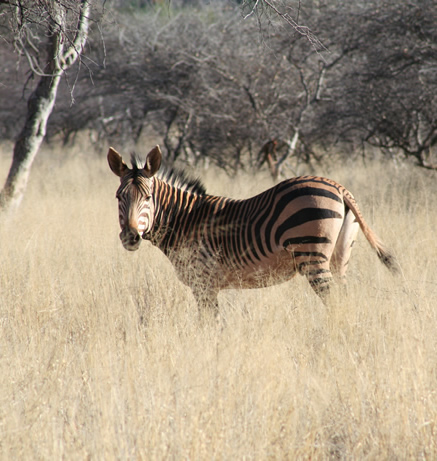 |
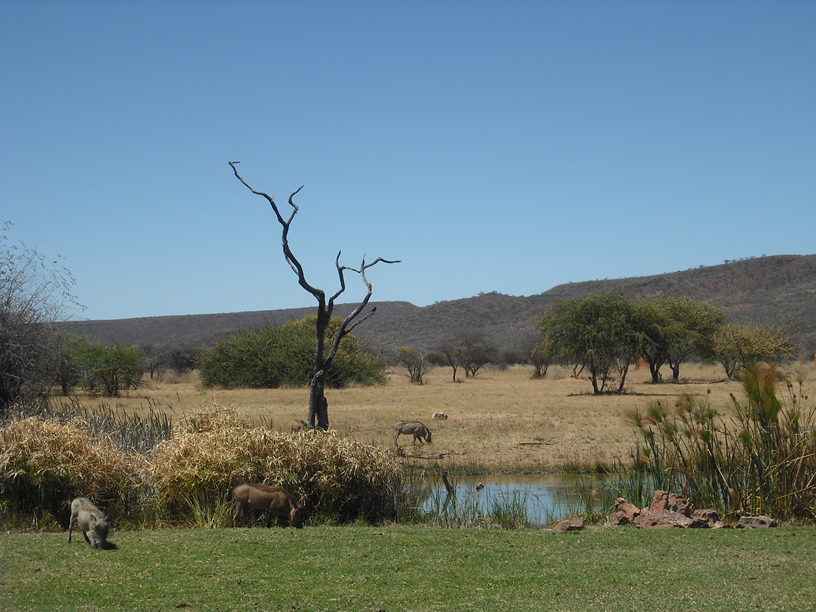
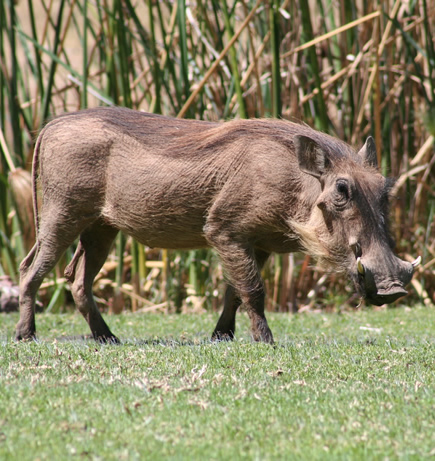
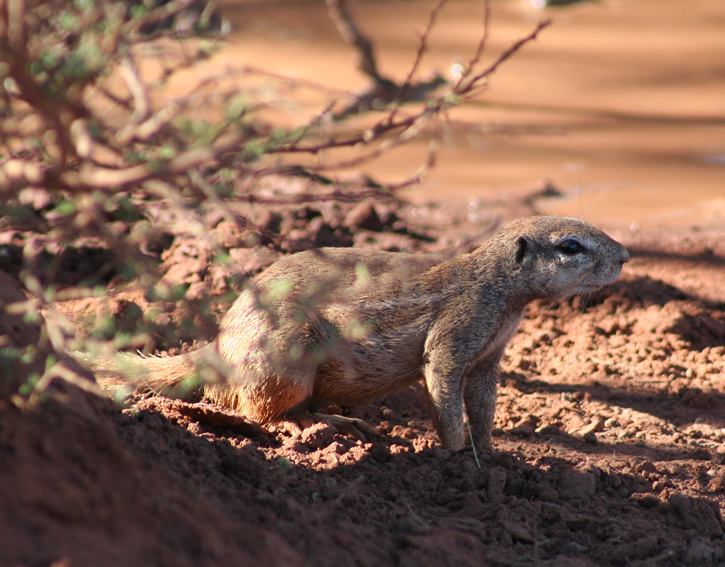
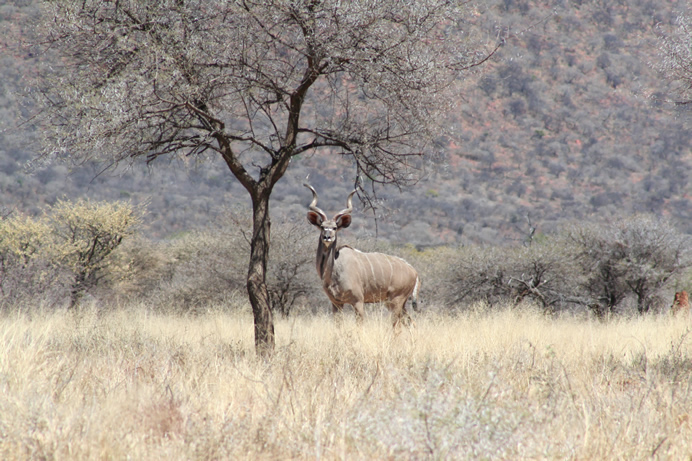
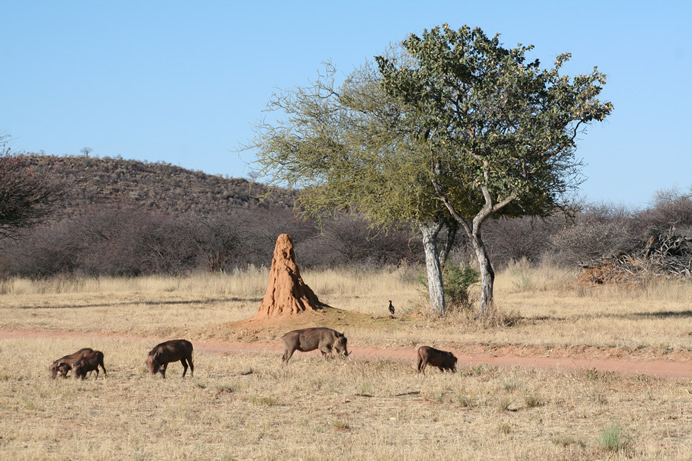
| wrattenzwijn | grondeekhoorn | koedoe | wrattenzwijnen, korhaan | bergzebra |
Bron: www.africat.org (oktober 2010)
In 1989, Tammy (née Hanssen) and her husband Uwe Hoth followed in Uwe’s father’s footsteps and continued with livestock farming after taking over Kaross, a 25.000-acre cattle farm on the south-western border of Etosha National Park. As with their predecessors and neighbouring farmers, they suffered high losses to predators, especially the spotted hyaena. Aware of the lion conflict along the southern Etosha boundary, they established the Afri-Leo Foundation. The Foundation was registered as a Namibian-based, non-profit organisation in 1997. Its mission was and still is today to find workable solutions to the ever-increasing human-wildlife conflict. With lion population ‘guestimates’ ranging from 600 to 1000 adults and sub-adults, and these cats being confined to limited areas in Namibia, Afri-Leo set out to develop a comprehensive programme in support of the long-term conservation and protection of the Namibian lion. Based on Kaross, the Foundation is ideally situated to play a vital role in supporting environmental education, human-wildlife conflict mitigation and research and monitoring programmes in the Kunene region of Namibia.
Since its inception, Afri-Leo has worked closely with the AfriCat Foundation. Due to the ever-increasing demands of large carnivore conservation, a mutual decision was reached to merge these groups under the AfriCat banner. Afri-Leo’s programmes and projects will continue and expand under the name AfriCat North.