De komt van origine voor in Zuid Afrika maar is ingeburgerd op veel plekken in de (sub)tropen en op sommige plaatsen in Zuid- en West-Europa. De plant komt onder meer voor op de Canarische Eilanden en Madeira. In Australië wordt de soort beschouwd als een te bestrijden onkruid. Het Department of Environment and Conservation publiceerde in de lente van 2010 er het onderstaande artikel over (Bushland News Issue 75).
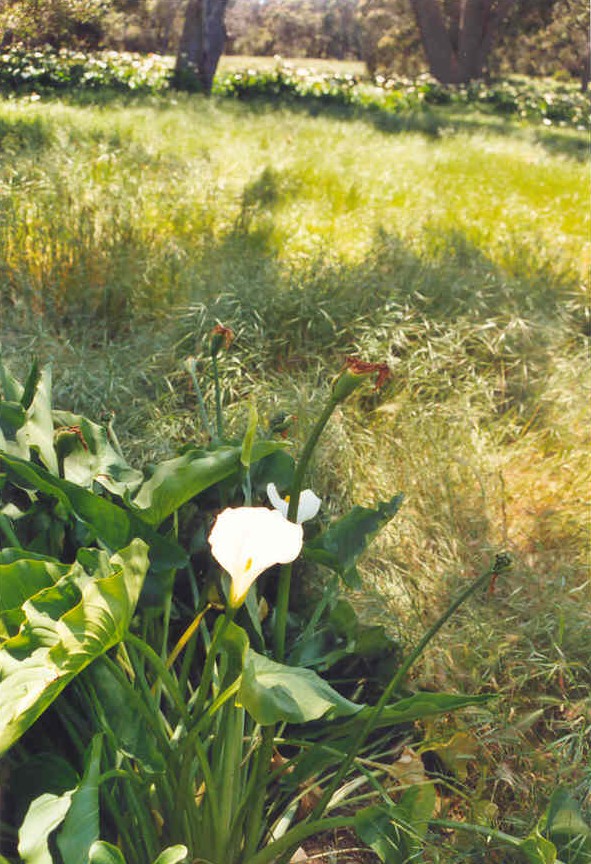
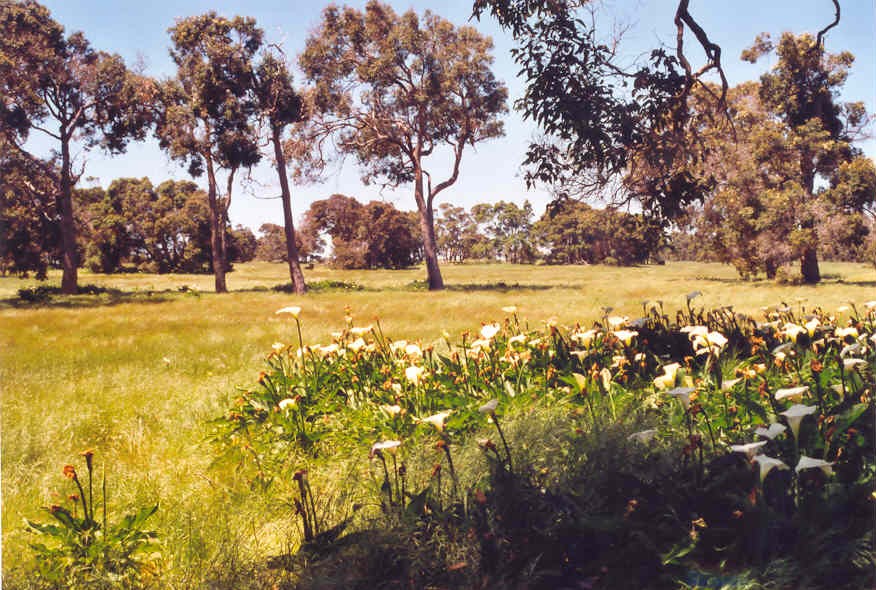 Arum lily (Zantedeschia aethiopica) is a widespread and abundant high priority environmental weed of the south-west. Infesting bushland, pastures and creeklines from Northampton to Albany, the arum lily is highly invasive. It can reproduce rapidly, form dense monocultures and severely impact on a range of wetland and terrestrial communities on the Swan Coastal Plain, forest areas and offshore Islands.
Also known as calla lily, pig lily, trumpet lily or funeral flower, arum lily originates in South Africa and was introduced to Western Australia as a garden plant. It spreads mainly by seed that is dispersed primarily by birds, but also through water and soil movement and by foxes and stock. A Declared Plant throughout the state, landowners are required to contain existing populations and are prohibited from moving the plant or seed, including offering the plant for sale.
Biology
Arum lily is a perennial herb that arises from a rhizomatous tuber. Growing to 1 m tall, it has large dark-green, fleshy, arrow-shaped leaves and white funnelshaped flowers with a yellow central flower spike. All parts of the plant are poisonous. Plants die back in summer to an underground tuber-like rhizome, re-sprouting in autumn and flowering in winter and spring from June to November. Large quantities of seed are set in orange fleshy fruits which are attractive to birds. Seed has short-term persistence, being viable for less than one year, with germination occurring in autumn and winter. Reproduction from tuber fragments and offset tubers also occurs, leading to localised spread.
Ecological impact
Arum lily is a common weed of freshwater wetlands, particularly on the Swan Coastal Plain. Many of these wetlands are important for biodiversity conservation and are key components in maintaining ecological functions associated with the hydrological cycle. Arum lily is a major threat to these areas, as it rapidly reproduces to form dense monocultures, can invade undisturbed bushland and readily out-competes the native understorey – changing vegetation structure and wildlife habitat. Arum lily is not confined to wetland ecosystems. A widespread infestation occurs at Garden Island where arum lily is considered the most serious weed threat to the island’s ecology. Dryland areas with limestone derived soils, such as the offshore islands, are particularly at risk from this weed.
Management
As arum lily is so widespread, controlling new, small or localised infestations or infestations close to native vegetation in good condition should be a priority for management. Mapping arum lily is an important first step and is most easily done in spring when the plants are in flower. For extremely localised infestations, the whole plant can be manually removed. Care must be taken as any tuber fragments or offsets will produce new plants.
There are several herbicides that are effective on arum lily, best applied between June and September. Early management prevents flowering and seed set but may miss later sprouting tubers. The use of metsulfuron methyl at 0.4g/L plus glyphosate 15ml/L and Pulse® penetrant 2ml/L has been very effective, but great care must be taken to avoid off-target damage to native vegetation as glyphosate is not a selective herbicide. Herbicide may induce tuber dormancy so control programs need to continue for five years. Seedlings take two to three years to mature and set seed, so control programs can be left between years before revisiting a site.