- karri borer
wikipedia
- familie
- bullich
- jarrah
- karri
- Leptospermum
- marri
- Melaleuca
- tingle
- tuart
foto, verspreiding
- bullich
- jarrah
- karri
- marri
- tingle
- tuart
Eucalyptus komt van oorsprong voor in Australië en aangrenzende gebieden. In Europa worden eucalyptussen aangeplant in het Middellandse Zeegebied. Ook aan de westkust van Engeland en Schotland kan de boom overleven. Er zijn slechts enkele soorten die in Nederland wintervast zijn.
Een aantal soorten wordt in andere subtropische en tropische landen aangeplant voor de houtindustrie: dit zijn vaak snelle groeiers. Het hout wordt onder andere gebruikt voor de vervaardiging van papier en als brandhout. Uit diverse Eucalyptus soorten wordt aromatische olie gewonnen. De olie wordt uit de bladeren gehaald en wordt gebruikt voor inhalatie bij verkoudheid om de luchtwegen vrij te maken. Vooral bij temperaturen van meer dan 30 °C is deze olie erg brandbaar en vaak de oorzaak van hevige bosbranden.
The tuart tree (E. gomphocephala) also known as the tooart, is a large, magnificent woodland tree. Tuart and its associated vegetation provide important biological and ecological values, and key habitats for many animal and fungal species. Aboriginal people valued tuart woodlands as grounds for hunting and gathering and used bark from the trees to make weapons and tools. The tuart grows in a 400-kilometre coastal band from Jurien Bay to just east of Busselton. It is the largest tree on the Swan Coastal Plain and can grow to between 12 and 42 metres in height. Tuart trees and their communities are under threat from urban, agricultural and industrial development. Since European settlement, 65 per cent of tuart woodlands have been cleared.
Uit: www.dec.wa.gov.au (mei 2011)
 |
 |
 |
 |
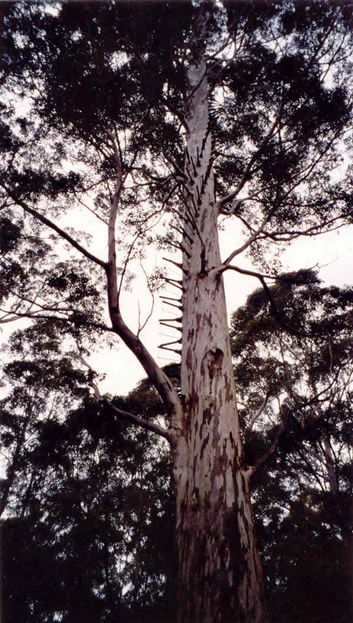 |
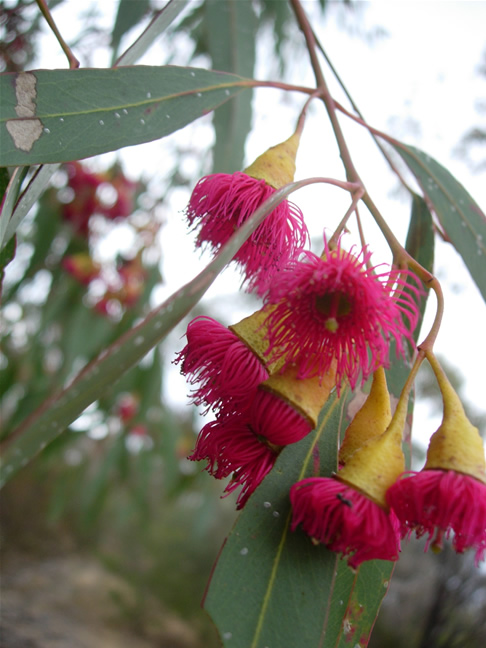
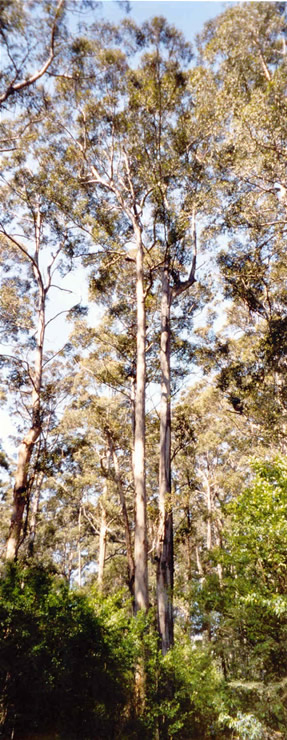
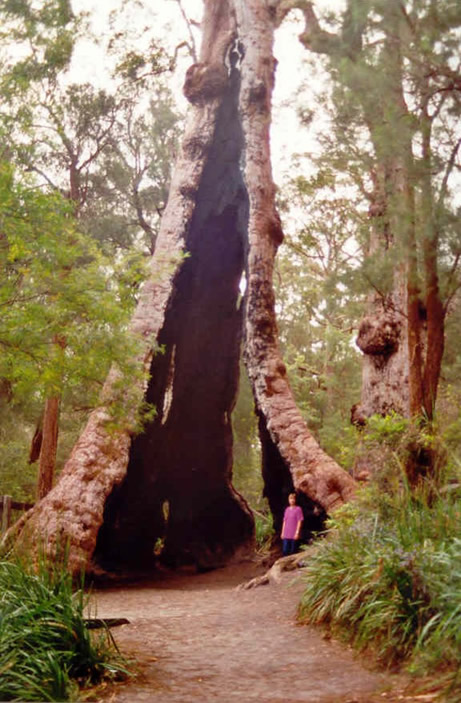
| E. Leucoxylon ? | karri | Tree Top Walk | tingle | voorheen lookout tree |
WA’s southern forest region is dominated by karri (E. diversicolor), a eucalypt that grows only in WA’s wettest corner. Karri is one of the tallest hardwoods in the world reaching a maximum height of about 90 metres. Many other forest trees grow in this diverse region, including the even rarer tingles (Eucalyptus jacksonii), as well as jarrah (Eucalyptus marginata), marri (Corymbia calophylla/ E. calophylla), bullich (E. megacarpa) and blackbutt (several species). Still, this is karri country to most people. The main belt of karri forest runs south from Nannup through Manjimup and pemberton to the Frankland River and then narrows as it stretches through to Denmark and Torbay, near Albany. Island pockets occur towards the west at Boranup, near Margaret River, and to the east in the Porongurups, near Mt Barker.
These forests cover about 20.000 hectares, about 80% of the area that existed before European settlement. More than 90% of the existing karri forest is on public land, including forests set aside in national parks, nature reserves and state forest. The forest is available for mainy community needs, including tourism, recreation, wildlife conservation, wood production and water catchment protection.
WA’s south-west has been occupied by Aboriginal people for at least 40.000 years. Shaped blades found near Walpole Nornalup NP have been dated to 6800 years ago. This makes them the oldest such artefacts discovered anywhere in Australia. European settlers were drawn to the southern forest to farm and to cut timber. New towns and roads supported new industries, but farming and forestry still form the backbone of the region’s economy.
Forest management in WA has been developed over decades to maintain all stages of the growing cycle, including old growth trees. This is done in state forest by ensuring that every hectare of forest cut for timber is replanted and by varying the rotation ages and harvesting systems. There are 40.800 hectares of old growth karri set aside in the larger conservation reserves and another 14.600 hectares of old karri in road, river and stream reserves from which logging is excluded. The management plan adopted by the State Government in 1994 will ensure that the proportion of karri forest in the old growth state will always be around 40%.
Karri develops mature characteristics between 100 and 150 years of age. Contrary tot popular belief, few karri and jarrah trees survive much longer than 350 years and most of the trees in old growth stands are younger than 250 years. Many young trees don’t survive to maturity because of disease, natural selection, insect damage or wildfire. Those that do make it to maturity are eventually replaced by younger trees in a natural cycle that never stops.
Uit: A guide to karri country, Department of Conservation and Landmanagement, oktober 1997)
teatree
Verschillende, niet gerelateerde, plantensoorten worden teatree genoemd. De plantengeslachten Leptospermum en Melaleuca die teatrees worden genoemd, zijn wel verwant; zij behoren tot de familie Myrtaceae.
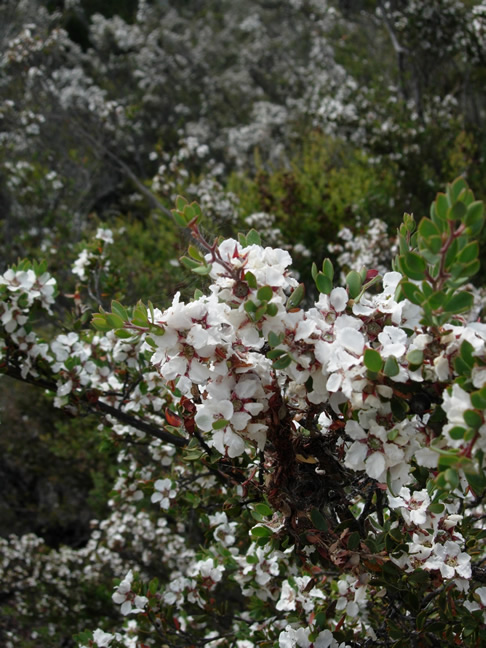
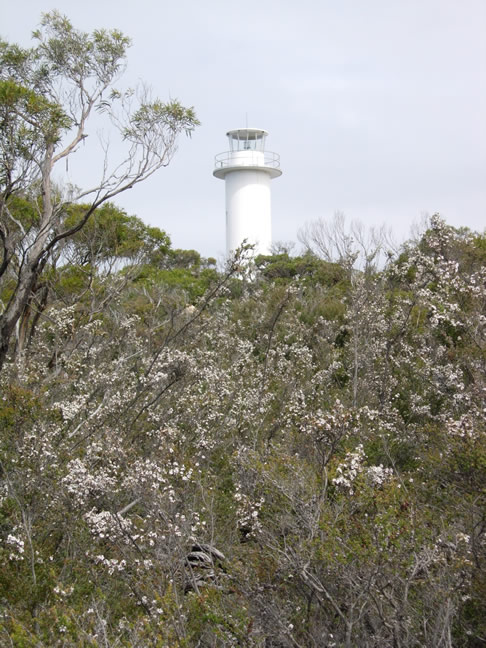
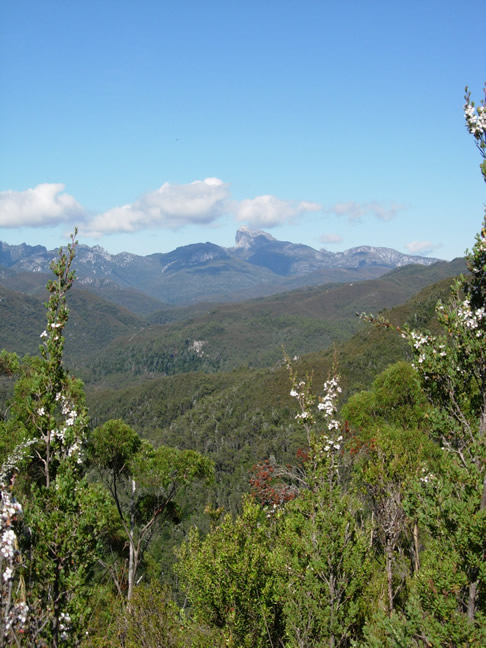
Leptospermum-soorten komen voor in zuidoost Azië, Nieuw Guinea, Australië en Nieuw Zeeland. Ongeveer 80 soorten zijn inheems in Australië. Deze plant dankt zijn naam aan het feit dat de kolonisten de bladeren van verschillende soorten gebruikten om een soort thee van de maken. De meeste Leptospermum-soorten hebben witte bloemen maar er zijn er ook een paar met roze of rode bloemen. De hoogte van de plant varieert per soort; er zijn er die meer op een boom dan op een struik lijken.
Leptospermum is bestand tegen moeilijke omstandigheden maar veel soorten zijn gevoelig voor bepaalde ziekten. Zo worden soorten met kleinere bladeren bedreigd door rupsen die het blad eten en tegelijkertijd de bladeren bijeenplakken en hun uitwerpselen er in achterlaten. Een plant kan hierdoor helemaal kaal worden en vervolgens afsterven. L. scoparium is blijkbaar erg gevoelig voor een schildluis die zwarte vlekken op het blad veroorzaakt. Het gaat hier waarschijnlijk om de aonidiella aurantii, die ook wel California red scale wordt genoemd.
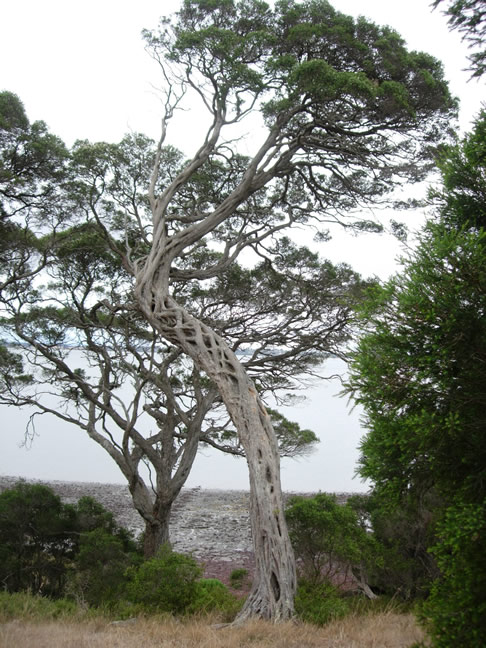
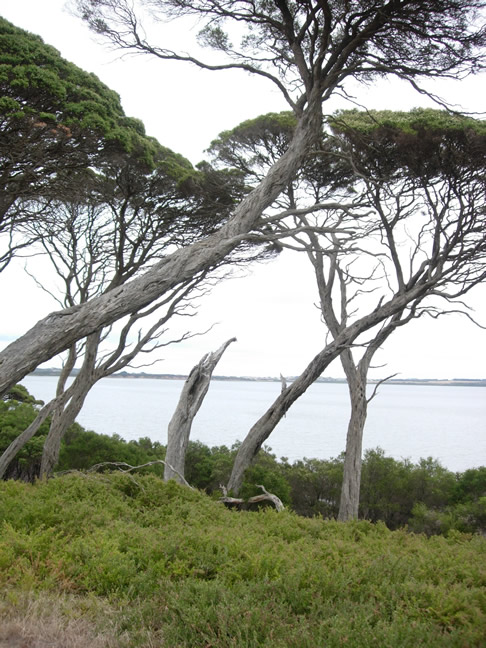
De teatreeolie die op op grote schaal wordt verkocht, is afkomstig van Melaleuca alternifolia. De soort Melaleuca lanceolata wordt ook wel moonah, Rottnest Island tea trea of Western black teatree genoemd. Deze plant wordt 5 tot 10 meter hoog en kan soms rare vormen aannemen. Hij komt voor in West Australië, Zuid Australië, New South Wales, Queensland en Victoria. Op Churchill Island (Victoria) staan exemplaren die honderden jaren oud zijn.
 |
 |
 |
 |
 |
| Leptospermum-soort (Freycinet NP, Tasmanië) |
Leptospermum-soort Franklin-Gordon WR NP |
moonah (Churchill Island, Victoria) |
moonah (Churchill Island, Victoria) |